

Blog, Counter Dining
Counter Culture: Why the Best Seat in the House Is Now the Closest One
Blog, Featured, Special Report
Richoux: A Considered Return
In conversation with Chris King, Founder, Crafted at Powdermills
By Tessa Shreeve, Managing Director, Luxury Restaurant Guide
Weekends tend to look after themselves in country house hotels. It’s the middle of the week that’s harder — particularly for more remote properties without a natural walk-in market.
Until recently, Powdermills — now reintroduced as Crafted at Powdermills — fitted that pattern neatly. Known to many as the place for afternoon tea, weddings and family occasions, it was dependable, familiar and firmly rooted in local life. What’s interesting now isn’t simply that the hotel has been refurbished, but that it has been rethought, reflecting a broader shift in how hospitality is experimenting with belonging, usage and value.
The Landscape: Different Models, Same Pressure
Hospitality isn’t converging on one model; it’s fragmenting into several — all responding to the same pressures: rising costs, changing behaviour, and the need to drive more regular use.
At one end are fully private members’ clubs where dining and events are available exclusively to members. Mosimann’s is a clear example: a members-only dining and events club where access itself defines the experience.
Next are private members’ clubs with hotels attached, but where bedrooms are available to non-members. Estelle Manor is the clearest example: a private club at its core, with hotel rooms operating separately.
Then there are hybrid hotel-clubs. The Twenty Two functions as a hotel and public restaurant, while much of the house operates as a private members’ club.
Forward-thinking luxury hotels — such as The Lanesborough — remain hotels first, but layer in spa, wellness and house memberships to encourage loyalty and repeat use without redefining access.
And finally, there are places that create a club-like atmosphere without membership at all. Coppa Club has built a “home-from-home” model — relaxed, all-day social hubs that feel like clubs, but charge no fees.
The structures differ, but the motivation is the same: hotels and restaurants need to be used more.
This is where Crafted at Powdermills sits.
“For a long time, country house hotels have relied on people coming for a reason,” says Chris King. “A wedding, a celebration, a stay. The harder question is how you give people a reason to come back when they’re not staying overnight.”
Crafted at Powdermills: Designed for Daily Life
King describes the idea behind Crafted as life-friendly — not as a marketing phrase, but as a practical filter for decision-making.
“Life-friendly means a place designed to fit real life as it’s lived,” he says. “Unpolished, changeable and human — somewhere you can arrive as you are and leave feeling more yourself.”
After more than 40 years under the same ownership, Powdermills remained a striking and much-loved country house hotel — recognisable, familiar and deeply woven into local life. When King acquired the property, it was still trading. His initial intention was to refurbish while operating, but it quickly became clear that too much fundamental work was required to do so piecemeal. The decision was taken to close the hotel fully and reopen properly — a process that ultimately took close to a year.
“It was a beautiful place,” King says. “People knew it, and they remembered it clearly. The challenge wasn’t to reinvent it, but to make it work properly for how people live and travel now.”
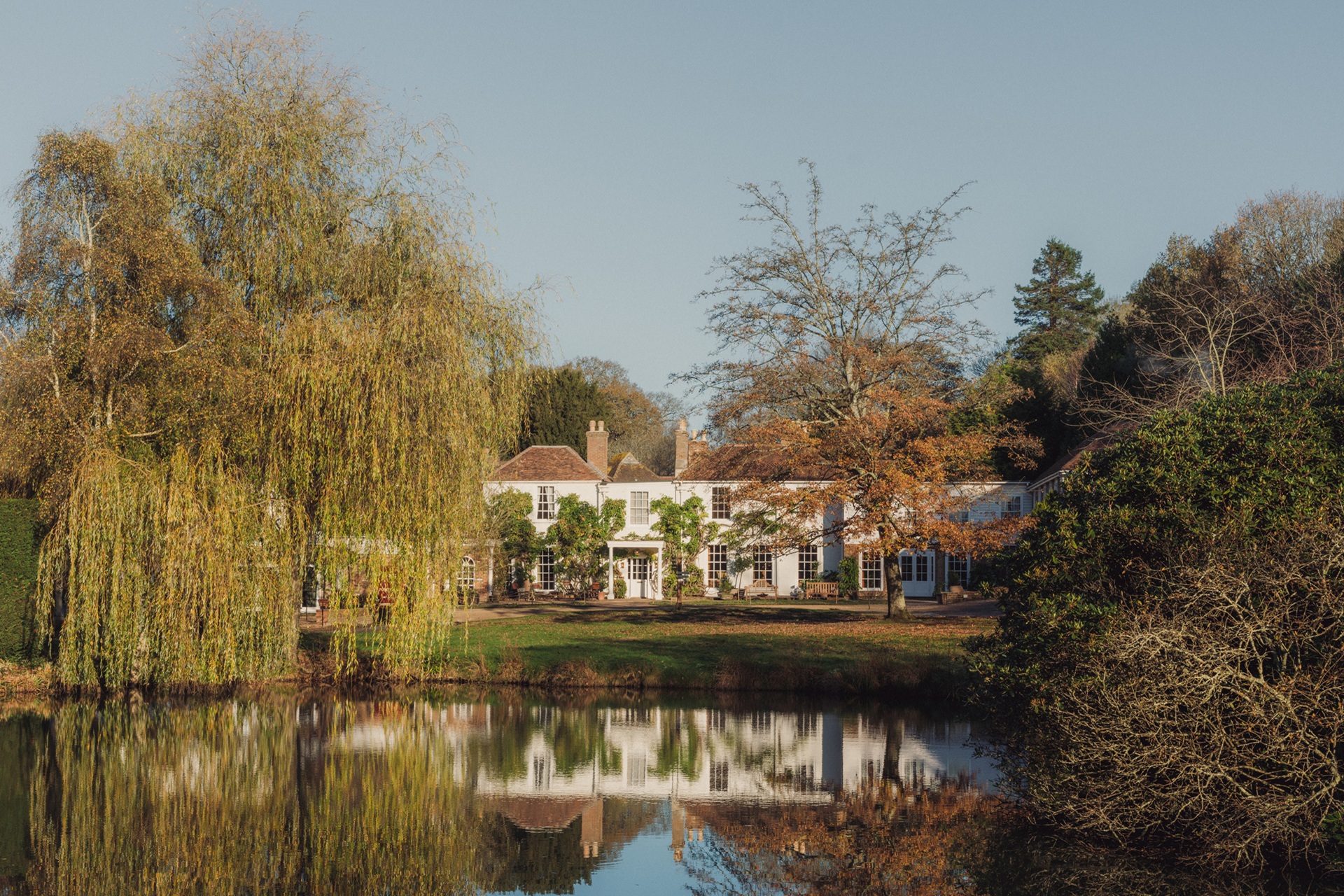
Much of the investment went into unglamorous but essential infrastructure, alongside rethinking how the estate is experienced day to day. Cars have been moved away from the front of the house, restoring views across the lake that had long been compromised and re-establishing a sense of arrival that allows the setting to take centre stage once again.
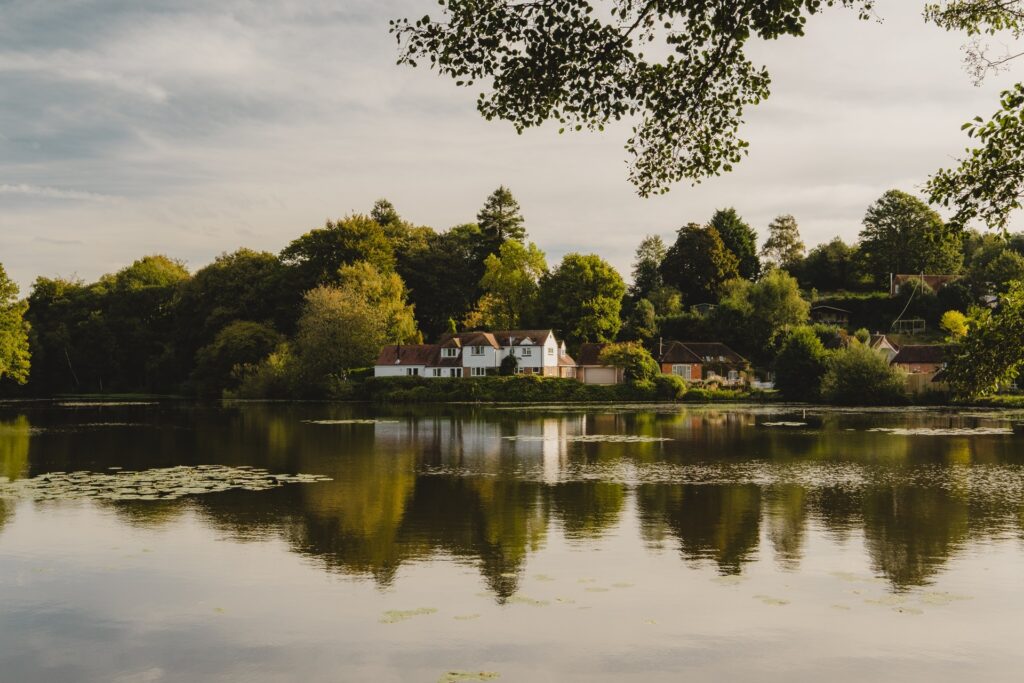
Set around a seven-acre lake within wider woodland and pastureland, and still easily accessible from London, the estate now plays to its natural strengths. Guests who choose to arrive by train are met at Battle station via an electric shuttle, removing one of the small frictions that can interrupt an otherwise seamless stay. The reopening was marked — fittingly — with fireworks, a nod to Powdermills’ history as a site once associated with gunpowder production, part of the wider industrial story of the Hastings area.
Crafted at Powdermills reflects the way King approaches hospitality more broadly. He operates outside the traditional hotelier mould, less interested in replicating established country house formulas than in testing how hospitality can work harder — socially as well as commercially.
“We spent a lot of time thinking about how the place would actually be used on a Tuesday,” he says. “If you can make that work — not just commercially, but socially — the rest starts to fall into place.”
“I’m not particularly interested in recreating what country house hotels used to be,” King adds. “I’m more interested in what they need to be used for now.”
Openness, With Structure
Crafted at Powdermills is first and foremost a hotel, with a public restaurant and pub, events space, and a members’ wellness club. Anyone can drop in to eat, drink or spend time at the property; membership currently applies to the gym, spa and classes.
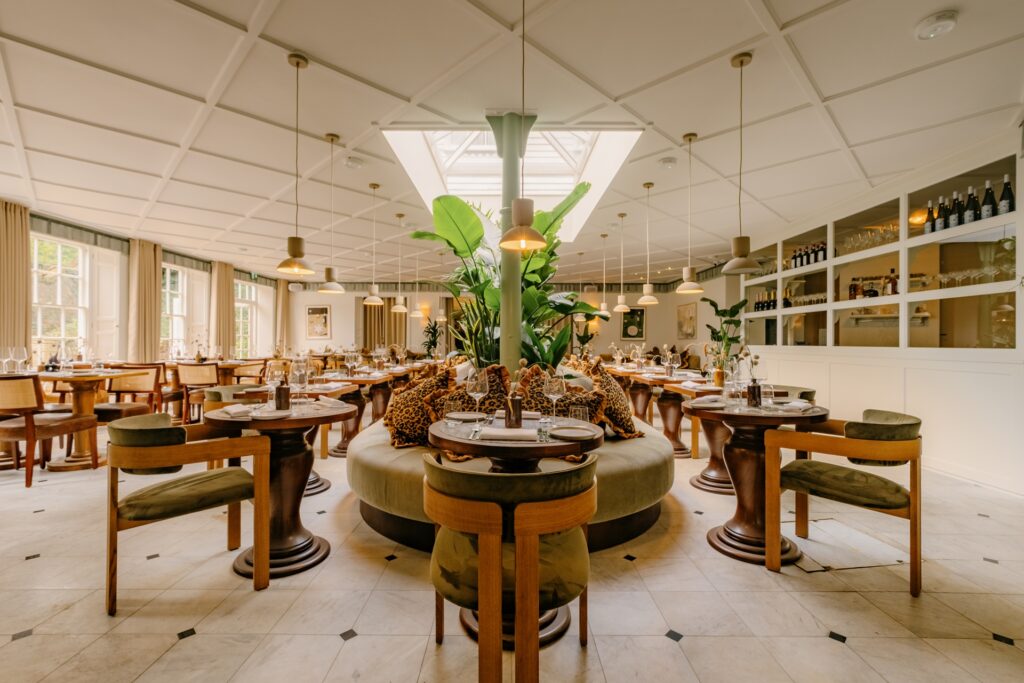
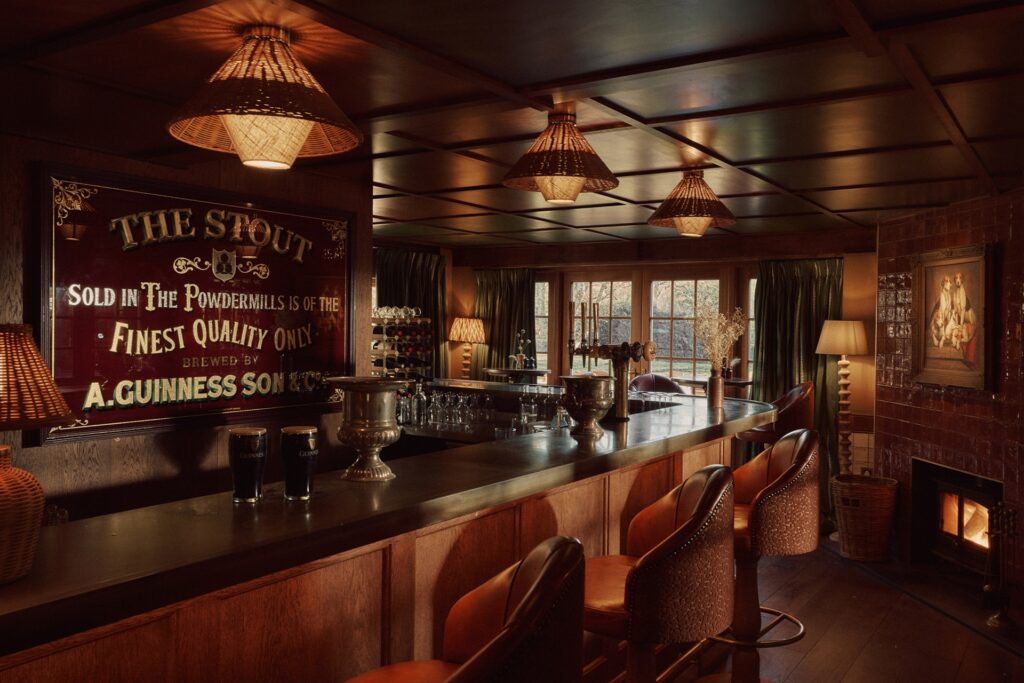
Food, drink and relaxed social spaces are central to how the place functions day to day. The pub offers an informal, drop-in setting, while the restaurant anchors longer visits and return dining, allowing guests to engage at different speeds without formality.
“The pub and the restaurant are as important as the bedrooms,” King says. “They’re the social glue. If people feel comfortable coming just for lunch, or a drink by the fire, they’re far more likely to come back for dinner — or stay the night another time.”
Membership behaviour already reflects this overlap. Roughly half of members are drawn primarily by wellbeing — movement, sauna, cold water and time outdoors — while the other half are motivated by community, culture, food and shared experience.
“In practice, most people move fluidly between the two,” King notes. “Someone might join for the gym and end up staying for supper or come for a talk and start coming regularly for movement. We don’t try to separate those behaviours — we design for overlap.”
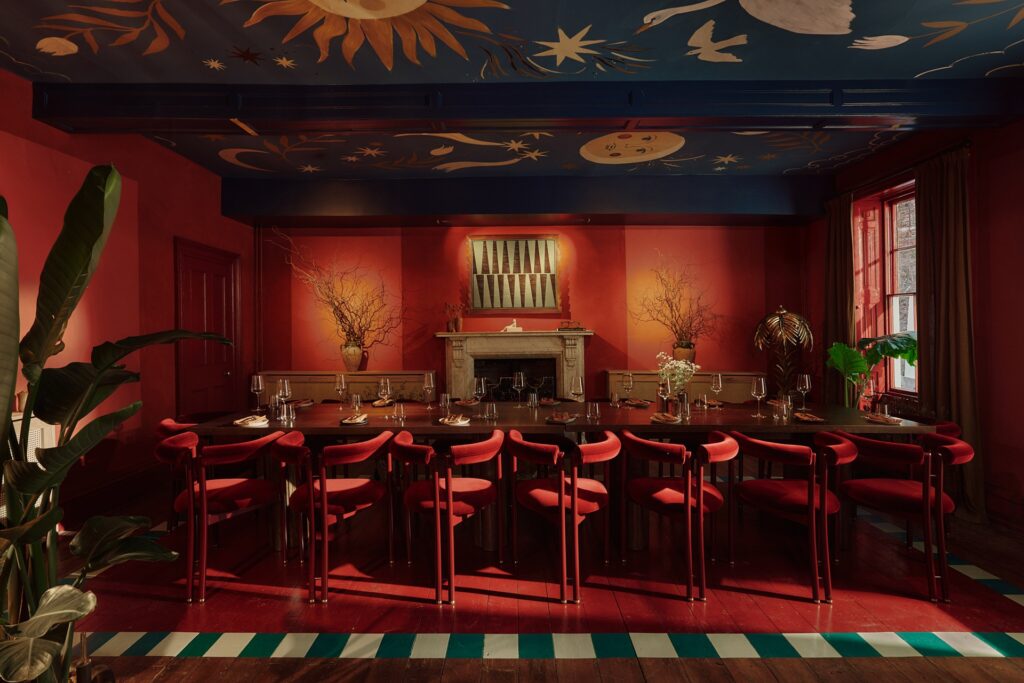
That overlap is reinforced through programming that favours participation over performance: craft workshops, seasonal suppers, acoustic and DJ nights, guided walks and trail runs, wellbeing sessions, and conversations with makers and artists — not headline events, but reasons to return.
Membership as a Tool, Not the Destination
What Crafted at Powdermills illustrates is a wider truth: membership isn’t the goal — relevance is.
Hotels are under sustained pressure. Labour, energy and food costs continue to rise, while guest behaviour has shifted towards informality and flexibility. One-off visits, however profitable, are no longer enough to sustain large estates.
“The most ‘Crafted’ gestures aren’t transactional,” King explains. “They’re experiential — a welcome drink by the fire, time booked into the sauna or padel courts, space held for a late checkout. Small things that make a stay feel considered rather than packaged.”
Membership, for King, remains adaptive. While wellness is currently the focus, the possibility of introducing a broader social membership remains open — shaped by how people actually use the place rather than by a fixed plan.
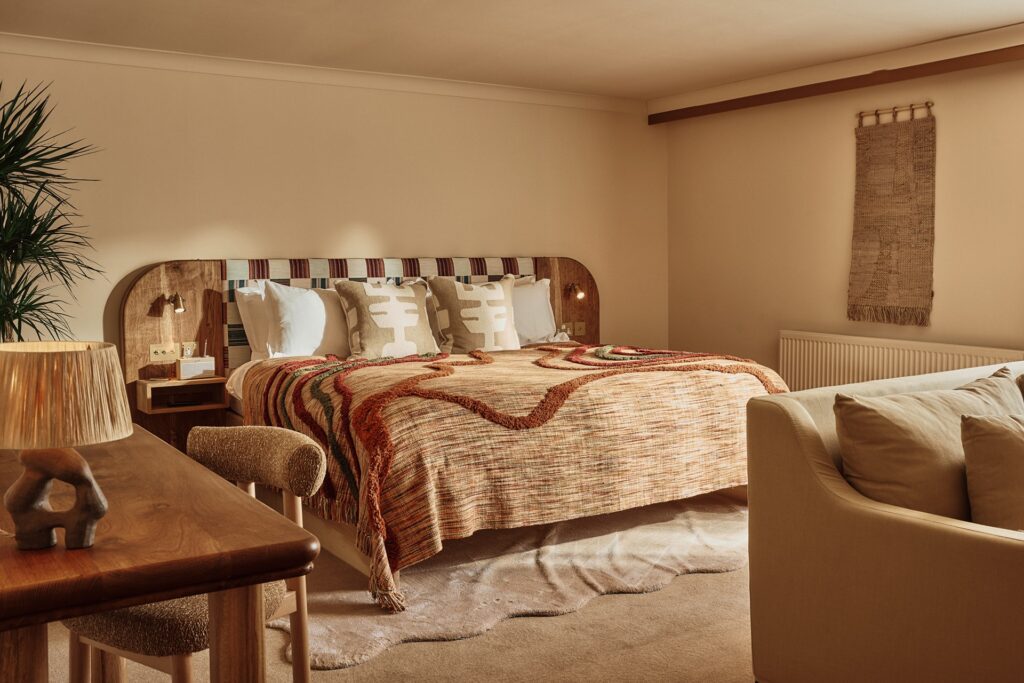
Guest rooms at Crafted at Powdermills are designed for relaxed, informal stays.
“Membership only works if it’s serving something bigger,” he says. “For us, it’s about learning how people want to engage before deciding what structure makes sense long term.”
Hotels aren’t becoming clubs. They’re becoming more adaptive businesses – social spaces as much as places to stay.
From Destination to Daily Relevance
The traditional country house hotel was built around a sense of exclusivity. What’s emerging now is a model built around flow — residential guests and local users moving in and out throughout the day, sharing space, with layered food and drink options and reasons to return that extend beyond staying the night.
Crafted at Powdermills sits comfortably within that shift: a hotel designed not just to be visited, but to be used. It’s a place designed to sit somewhere between home, work and hospitality.
Crafted at Powdermills
Powdermills Lane
Battle
East Sussex
TN33 0SP
Luxury Restaurant Guide View
Luxury Restaurant Guide operates between hotel and club — not anchoring members to one place but moving them between many. It encourages discovery, repeat visits and broader use, connecting hotels, restaurants and private clubs within a wider hospitality ecosystem rather than a closed loop.
LRG member privilege: a welcome glass of English Sparkling (£16pg) when dining at Crafted at Powdermills, see details.
Luxury Restaurant Guide works with hotels, restaurants and private clubs across the UK to explore new models of engagement, discovery and use.
Luxury Restaurant Club
Not a member of Luxury Restaurant Club? Enjoy privileges and special invitations to over 435 leading restaurants around the UK, just £95 per annum. Or enjoy a two-week free trial here.